Introduction
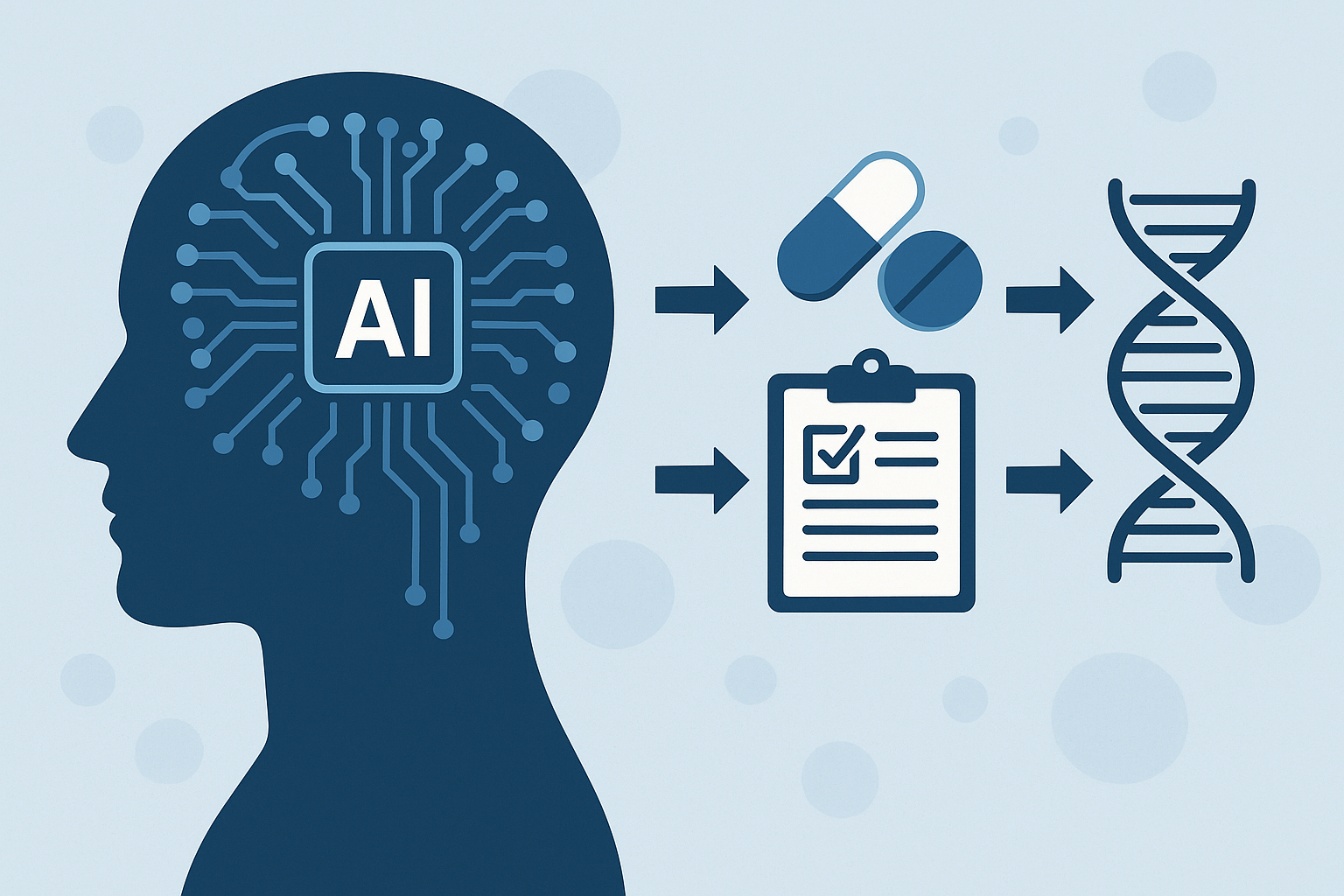
Bringing a new therapy from concept to market is a long, complex, and resource-intensive process. Timelines typically extend 8–12 years and costs can exceed $2 billion [1]. Despite this investment, only about 10% of drugs entering clinical trials ultimately receive approval [2]. These inefficiencies stem from high attrition rates, translation gaps between preclinical and clinical findings, and operational bottlenecks.
Artificial intelligence (AI) is often positioned as a transformative solution to these challenges. While AI holds significant promise, particularly in areas rich with data or repetitive manual tasks, it is not a single solution that can fix the drug development process. Its value is clearest when it augments existing workflows, accelerates decision-making, or extracts insights from complex datasets, rather than attempting to replace human expertise outright [3].
This paper examines practical opportunities for AI across preclinical and clinical development, including pharmacokinetics (PK), pharmacodynamics (PD), safety, and efficacy workflows. We also look at applications in regulatory strategy and competitive intelligence. Importantly, we highlight both the areas where AI is proving most useful today and the current limitations that sponsors must navigate.
AI in Preclinical Development
Preclinical development involves characterizing safety, efficacy, and PK/PD properties in vitro and in vivo before advancing to first-in-human studies. These studies are critical but resource-heavy, and translational gaps where animal data fail to predict human outcomes remain a major source of failure [4].
AI offers opportunities to streamline preclinical workflows, particularly in predictive modeling, automation, and data integration. However, its success depends on data quality, biological relevance, and validation strategies.
Key Opportunities
1. Predictive PK/PD Modeling
Machine learning algorithms can predict key PK parameters (e.g., clearance, half-life, volume of distribution) and PD responses based on molecular structure or early in vitro data [6]. These predictions can complement traditional PK studies by identifying outlier compounds earlier in the pipeline.
Example: Several companies are piloting digital twin models, virtual patient representations that integrate preclinical and systems pharmacology data to simulate human PK/PD prior to clinical trials [5]. Sanofi’s QSP-based simulations in asthma and oncology are early examples, where model predictions are used to refine dose range selection rather than replace first-in-human data.
Caveat: Predictive accuracy varies across drug modalities (e.g., small molecules vs. biologics). Models trained on narrow chemical space may not generalize well to novel scaffolds, and regulators expect in vivo data to validate AI predictions [13].
2. Predictive Toxicology and Safety Assessment
Neural networks and Bayesian models can identify toxicity patterns using historical toxicology datasets, omics data, and chemical structures [7]. This can prioritize safer compounds and reduce reliance on broad animal screening.
Example: Ignota Labs applies graph neural networks to predict organ-specific toxicities [8], while Invivo Cloud uses computer vision to analyze behavioral changes in animal studies automatically (e.g., stress indicators across 100+ mice simultaneously) [9,10].
Caveat: While promising, AI toxicity predictions currently supplement rather than replace animal studies. They work best for well-characterized mechanisms (e.g., hepatotoxicity) but are less reliable for novel targets or rare adverse events [14].
3. Automating Experiment Design and Data Capture
Natural language processing (NLP) tools can mine literature and historical data to propose study designs or generate draft protocols [11]. Robotics and AI-driven automation enable high-throughput screening and consistent data collection [12].
Example: Platforms like ModernVivo use semantic search to generate draft animal study protocols based on thousands of prior experiments, accelerating planning and promoting best practices (e.g., 3Rs — reduce, refine, replace animal use) [11].
Caveat: Automated designs still require expert review. AI may surface what worked before but cannot always account for novel scientific hypotheses or unique program needs [14].
4. Formulation and Optimization
Generative AI models support formulation design by predicting solubility, stability, and release profiles, potentially reducing trial-and-error cycles [12].
Example: Startups are using AI to optimize biologic formulations for stability under stress conditions (temperature, pH) before confirmatory bench testing [12].
Caveat: Formulation predictions depend heavily on available datasets; novel modalities (e.g., radiopharmaceuticals, cell therapies) often lack enough historical data for robust modeling [14].
Current Limitations
- Data heterogeneity: Preclinical data often come from diverse platforms (cell assays, animal models, omics) and lack standardization, complicating model training [15].
- Validation gaps: AI predictions require experimental confirmation; relying solely on algorithmic results risks false positives or missed liabilities [13].
- Regulatory acceptance: While agencies are open to AI-derived insights, they rarely accept them as stand-alone evidence; traditional in vivo studies remain mandatory [3].
- Interpretability: Black box models can hinder scientific understanding and decision-making, especially when mechanistic insights are required for translational planning [14].
Practical Takeaway
In preclinical development, AI’s near-term value lies in augmenting, not replacing, traditional workflows:
- Prioritizing compounds earlier (triage)
- Automating labor-intensive data capture and literature mining
- Enhancing predictive confidence when integrated with mechanistic models
AI in Clinical Development
Clinical development represents the most resource-intensive stage of drug R&D, encompassing first-in-human through Phase III trials. These studies evaluate safety, efficacy, and exposure–response relationships in humans, but are often slowed by recruitment challenges, protocol amendments, and complex data analyses. AI and automation can help address several of these pain points, not by replacing traditional methods, but by augmenting existing processes and enabling more data-driven decisions.
Operational Workflows
1. Trial Design and Feasibility
AI can analyze historical clinical trial protocols, real-world data (RWD), and regulatory guidance to recommend optimized trial designs. It helps identify endpoints, inclusion/exclusion criteria, and adaptive elements that could reduce amendments or improve success probability.
Example: Generative AI models trained on thousands of protocol templates are already being piloted by CROs to draft protocol sections or simulate recruitment feasibility under various designs [4]. The World Economic Forum highlighted trial design as one of the highest value areas for generative AI, citing potential cost savings from avoiding mid-trial amendments [4].
Caveat: AI suggestions must be reviewed by clinical and regulatory experts; algorithms may overlook nuances such as investigator experience, regional regulatory differences, or ethical considerations.
2. Site Selection and Feasibility
Selecting the right trial sites is critical to recruitment speed and trial success. AI can integrate historical site performance, patient demographics, and disease prevalence data to prioritize high-performing sites.
Example: A large oncology sponsor used an AI-driven feasibility platform that combined internal and registry data to rank sites by predicted enrollment performance. The model identified several underutilized community hospitals with eligible patient pools, leading to faster enrollment compared to prior trials [4].
Caveat: AI relies on quality and completeness of past site data. Underreporting or outdated site metrics can skew predictions, so feasibility assessments should blend algorithmic and on-the-ground insights.
3. Patient Recruitment and Retention
AI can mine electronic health records (EHRs), claims data, and patient registries to identify eligible patients and automate outreach. Natural language processing is particularly useful for uncovering eligibility criteria buried in free-text clinical notes (e.g., biomarker status or prior therapy lines).
Example: In an oncology trial, AI-enabled EHR mining identified dozens of eligible patients at community sites that were missed by manual screening. This improved accrual rates and shortened recruitment timelines [11].
Retention: AI-driven chatbots can engage patients between visits with reminders, FAQs, and motivational messages, while predictive models flag participants at risk of dropping out based on adherence patterns [11].
Caveat: Access to EHR data can be limited by privacy and interoperability barriers; also, AI-based recruitment tools must be carefully validated to avoid inadvertently excluding minority or underserved populations.
4. Adaptive Monitoring and Quality Oversight
AI models can continuously analyze safety data (adverse events, labs, vital signs) to detect early safety signals or site-level anomalies. Centralized monitoring powered by AI can reduce reliance on labor-intensive on-site visits.
Example: Some sponsors have adopted AI-based central statistical monitoring systems that automatically flag data irregularities (e.g., abnormal patterns from a single site) for follow-up [19].
Caveat: While promising, regulators expect clear documentation of how AI signals are interpreted and acted upon; algorithmic outputs cannot replace standard safety oversight processes.
Data Analysis and Insights
1. PK/PD Modeling and Dose Optimization
AI can enhance traditional pharmacometrics by identifying complex relationships in exposure–response data or integrating high-dimensional biomarker data into dose selection strategies.
Example: FDA has acknowledged AI’s role in predictive PK and exposure–response modeling, particularly in early-phase dose-finding studies where mechanistic and empirical data must be combined [3].
Caveat: AI-driven PK/PD analyses work best when combined with established population modeling methods (e.g., NONMEM, nlmixr) rather than replacing them; regulatory agencies still require mechanistic justification for dosing decisions.
2. High-Complexity and Unstructured Data
Clinical trials increasingly collect imaging, genomic, wearable, and patient-reported data. AI excels at analyzing unstructured formats:
- Computer vision can assess tumor response on imaging (e.g., RECIST endpoints) more consistently than manual reads.
- NLP can extract adverse events or symptom trends from clinical notes and diaries.
- Time-series models can summarize continuous wearable data (heart rate, activity) into clinically meaningful metrics.
Example: AI-based radiology tools have been piloted in oncology trials to speed tumor burden assessment and reduce inter-rater variability [14].
Caveat: Validation is critical. AI image assessments must correlate with clinical outcomes and be accepted by regulators before replacing radiologist assessments.
3. Predictive Insights and Decision Support
AI can synthesize interim data and historical benchmarks to predict trial success probabilities or identify subpopulations most likely to benefit.
Example: Sanofi’s digital twin program integrates QSP models and machine learning to simulate outcomes for virtual patient cohorts alongside real trials, helping refine dose and enrollment strategies in diseases like asthma [5].
Caveat: Predictions are probabilistic and should guide, not dictate, decisions; premature reliance on AI forecasts may risk underpowered or biased conclusions.
Limitations and Challenges in Clinical Use
- Data privacy and access: EHR mining and real-world data use face significant hurdles from privacy regulations and interoperability gaps between systems.
- Algorithm bias: If historical data reflect inequities (e.g., underrepresentation of minority groups), AI recruitment tools may perpetuate them unless corrected.
- Regulatory acceptance: AI-derived endpoints or analyses require clear validation; agencies are cautious about accepting black-box results without explainability.
- Integration with workflows: AI tools must fit seamlessly into trial operations. Overly complex systems can slow teams rather than help.
Practical Takeaway
AI’s most immediate benefits in clinical development lie in:
- Streamlining recruitment and feasibility planning
- Enhancing monitoring and quality oversight
- Extracting insights from high-dimensional trial data
However, successful adoption requires human oversight, robust validation, and realistic expectations. AI is best viewed as an augmentation layer, helping clinical teams make better, faster decisions, rather than a replacement for existing processes.
AI in Regulatory and Competitive Intelligence
Drug development success hinges not only on robust science and trial execution but also on navigating regulatory requirements and competitive landscapes. Both areas involve sifting through large volumes of unstructured data, making them well-suited for targeted AI applications. While AI can streamline monitoring and reporting, expert oversight remains essential to interpret findings and ensure compliance.
Regulatory Applications
1. Document Preparation and Submission Support
Regulatory submissions such as INDs, BLAs, and NDAs involve compiling thousands of pages of data into structured formats. AI can automate aspects of document generation and cross-referencing, reducing manual effort.
Example: Several pharmaceutical companies are piloting generative AI tools to draft clinical overviews and safety narratives from trial data [3]. These tools auto-populate tables and flag inconsistencies across sections, accelerating internal review cycles.
Caveat: AI-generated documents must be validated carefully; current models may miss subtle regulatory nuances (e.g., specific FDA module formatting or EMA phrasing expectations). Final submissions still require human QC and sign-off.
2. Regulatory Intelligence and Monitoring
AI can continuously track updates from global health authorities — FDA, EMA, PMDA — and summarize relevant changes (e.g., new guidelines, safety communications).
Example: AI-driven monitoring platforms now aggregate and classify regulatory documents, highlighting actionable changes for specific therapeutic areas (e.g., oncology or gene therapy) [15]. This reduces manual effort and ensures teams remain current with evolving requirements.
Caveat: Automated monitoring is only as good as its source coverage; niche updates (e.g., local ethics boards) may still require manual tracking. Interpretation of regulatory intent also remains a human task.
3. Augmenting Regulatory Strategy
By analyzing historical regulatory decisions, AI can help anticipate questions or objections likely to arise during agency review.
Example: Some companies use AI to benchmark their submission data against past approval packages (e.g., dose justification or CMC data depth) to identify potential gaps preemptively [3].
Caveat: Such analyses are informative but not predictive; regulatory outcomes depend on evolving scientific standards and context-specific factors.
Competitive Intelligence
1. Landscape Monitoring
Tracking competitors’ trials, publications, and partnerships traditionally requires manual searching across registries, journals, and news sources. AI can aggregate and normalize these diverse data streams for near real-time awareness.
Example: Platforms like AlphaSense and Northern Light aggregate 10,000+ content sources, including trial registries, patents, earnings calls, and use natural language processing to surface relevant competitor insights [20].
Caveat: Comprehensive monitoring depends on licensing and access to premium data; free or public sources may not capture all relevant competitive moves.
2. Summarization and Trend Analysis
Generative AI can synthesize competitor updates into concise summaries or detect thematic trends (e.g., a surge in IL-13 antibodies entering Phase II).
Example: AI smart summaries can condense multiple competitor earnings calls into a single briefing, highlighting shifts in R&D priorities or emerging safety concerns [21].
Caveat: Summaries may omit nuance or context; human analysts should verify key insights before strategic decisions are made.
3. Predictive Competitive Insights
Advanced models analyze historical trial outcomes, patent trends, and funding data to predict competitor success probabilities or future pipeline moves.
Example: Startups are experimenting with AI-based predictive CI to forecast which biotechs in oncology might be acquisition targets based on publication and clinical trial patterns [20].
Caveat: Predictive CI is still experimental; outputs are probabilistic and best used for scenario planning rather than definitive forecasts.
Limitations and Considerations
- Data quality and coverage: Competitive and regulatory datasets may be incomplete or inconsistent; gaps must be filled through expert curation.
- Explainability: AI can summarize trends but not always explain underlying strategic drivers — analyst interpretation remains critical.
- Regulatory caution: Agencies are exploring AI themselves but have yet to formalize review frameworks for AI-derived intelligence; sponsors must ensure transparency in methods when referencing AI analyses in submissions.
Practical Takeaway
AI adds value in regulatory and competitive intelligence by:
- Automating routine monitoring and document generation
- Providing rapid, aggregated insights across fragmented information sources
- Highlighting emerging trends and competitor moves earlier than traditional methods
Conclusion
Artificial intelligence is steadily finding its place in drug development workflows, not as a wholesale replacement for existing methods, but as a complementary tool that enhances efficiency, supports decision-making, and uncovers insights that might otherwise remain hidden.
In preclinical development, AI is helping prioritize compounds, predict PK/PD and toxicity, and streamline experimental design. These tools are most effective when paired with mechanistic understanding and confirmatory in vivo studies, rather than used in isolation. Translational gaps remain a key challenge; AI can help close them but cannot eliminate the need for careful biological validation [6,7,14].
In clinical development, AI shows near-term promise in patient recruitment, site selection, and high-dimensional data analysis (e.g., imaging, wearables). Tools such as digital twin simulations and AI-enabled central monitoring illustrate how predictive modeling can inform trial operations and safety oversight [5,19]. However, regulatory acceptance still hinges on transparency and rigorous validation — AI-derived endpoints or predictions must be explainable and linked to established standards [3].
For regulatory and competitive intelligence, AI can automate labor-intensive monitoring and generate concise summaries of evolving landscapes. This enables teams to react quickly to new guidance, competitor filings, or emerging therapeutic trends [20,21]. Yet, human expertise remains vital for interpretation and strategy; AI can surface patterns but cannot fully assess their scientific or business implications.
Balanced Outlook
- Where AI Adds Value Today: Automating repetitive tasks, mining large datasets for feasibility and safety signals, and supporting trial recruitment and monitoring.
- Where Caution Is Needed: Using AI as stand-alone evidence for regulatory filings, extrapolating predictions to novel modalities, or over-relying on black-box models without mechanistic rationale.
- Next Steps for Sponsors:
- Start with targeted pilot projects (e.g., recruitment optimization, literature mining)
- Validate outputs against established methods
- Build internal AI literacy and governance to ensure appropriate oversight
- Engage early with regulators on AI use in submissions
Final Thoughts
The promise of AI in drug development is significant, but so are the complexities. Sponsors that adopt AI thoughtfully and incrementally will benefit most, balancing innovation with rigor. AI can accelerate certain parts of the development journey, but ultimate success still depends on strong science, well-designed studies, and informed human judgment.
References
- DiMasi JA, Grabowski HG, Hansen RW. Innovation in the pharmaceutical industry: New estimates of R&D costs. J Health Econ. 2016;47:20-33.
- Wong CH, Siah KW, Lo AW. Estimation of clinical trial success rates and related parameters. Biostatistics. 2019;20(2):273-286.
- FDA. Artificial Intelligence and Machine Learning (AI/ML) in Drug Development. U.S. Food and Drug Administration. 2023.
- World Economic Forum. Transforming Clinical Trials with Artificial Intelligence. 2022.
- Sanofi. Digital Twin Approaches in Clinical Development. Company Presentation, 2023.
- Riniker S, Landrum GA. Open-source platform for predictive pharmacokinetics. J Chem Inf Model. 2015;55(12):2562–2574.
- Thomas DG et al. Machine learning methods in preclinical toxicology. Toxicol Sci. 2020;174(2):190-204.
- Ignota Labs. Predictive Toxicology using AI. Company White Paper, 2023.
- Invivo Cloud. Behavioral Analytics in Preclinical Safety Studies. Company Blog, 2022.
- Brown A et al. Computer vision applications for animal behavior tracking. Lab Anim (NY). 2021;50(6):145-153.
- ModernVivo. AI-powered protocol design for preclinical studies. 2023.
- Smith J, Patel R. Formulation optimization using generative models. Drug Dev Ind Pharm. 2022;48(5):631-640.
- EMA. Reflection paper on the use of AI in the medicinal product lifecycle. European Medicines Agency, 2023.
- Sun H, et al. Translational challenges in preclinical drug development. Clin Pharmacol Ther. 2021;109(4):857-865.
- FDA/EMA/PMDA joint workshops on AI in regulatory science. Meeting notes, 2022–2023.
- Northern Light. Competitive Intelligence Automation Solutions. Company Website, 2023.
- AlphaSense. Market intelligence with AI-powered search. Company Overview, 2023.
- European Medicines Agency. Clinical trial safety monitoring guidance. 2022.
- Central Statistical Monitoring in Clinical Trials – Practical Implementations. DIA Whitepaper, 2021.
- Company Reports: AI summarization of competitor pipelines. AlphaSense, 2023.
- Industry Trends Report: AI-driven competitive intelligence in oncology. Northern Light, 2023.