Global Pediatric Strategy in 2026: Synchronizing iPSP, PIP, and New 2026 Incentives in Japan and China

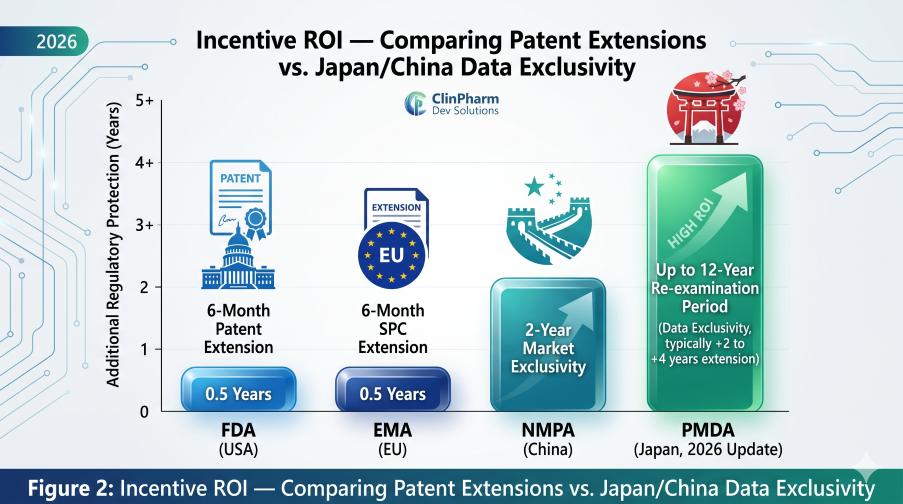
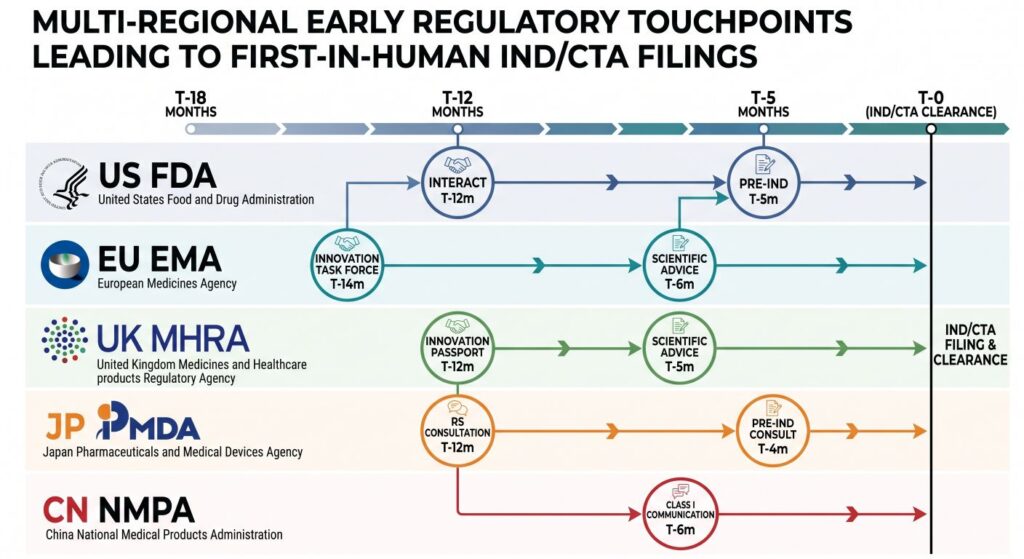
Strategic Overview: As of April 14, 2026, we are in the critical pre-implementation window for the most significant global pediatric regulatory shifts in a decade. With only weeks remaining until the May 2026 implementation of new incentives in Japan and China, sponsors must reconcile the 24-month “Timing Gap” between EMA and FDA milestones. This analysis […]

Global Pediatric Strategy in 2026: Synchronizing iPSP, PIP, and New 2026 Incentives in Japan and China Read More »

Integrating ICH E11A and the Plausible Mechanism Framework for Pediatric Extrapolation: 2026 Regulatory Update

Executive Summary: As of March 2026, pediatric drug development has moved beyond simple “trial size reduction” to a strategy of Mechanistic Justification. While the finalized ICH E11A (2025) guideline provides the high-level extrapolation tree, the February/March 2026 FDA Modernization Pack—specifically the Plausible Mechanism Framework and the new Bayesian Methodology Standards—has redefined the “totality of evidence.”

Integrating ICH E11A and the Plausible Mechanism Framework for Pediatric Extrapolation: 2026 Regulatory Update Read More »

The FDA’s March 2026 NAMs Guidance: A Strategic Framework for Reducing Animal Testing in Biotech

Executive Summary On March 18, 2026, the FDA issued a landmark draft guidance on New Approach Methodologies (NAMs), signaling a transformative shift in the preclinical landscape. For small biotechs, the guidance provides a formal pathway to use in silico models, organ-on-a-chip technology, and other non-animal methods to support regulatory decision-making. This is no longer just

The FDA’s March 2026 NAMs Guidance: A Strategic Framework for Reducing Animal Testing in Biotech Read More »

The MIE Shift: When the Model Becomes the Primary Evidence for FDA Approval

Executive Summary For a long time, the pharmaceutical industry viewed Clinical Pharmacology models as helpful supporting characters. They were tools used to guide a trial design or help justify a specific dose. As we move through 2026, a fundamental shift has taken place. The FDA and EMA have moved from Model Informed to Model Integrated

The MIE Shift: When the Model Becomes the Primary Evidence for FDA Approval Read More »

Beyond Biosimilarity: The 2026 Strategic Blueprint for Day 1 Interchangeability

Beyond Biosimilarity: The 2026 Strategic Blueprint for Day 1 Interchangeability Executive Summary For over a decade, the Interchangeable designation was the most expensive badge of honor in the biosimilar industry, typically requiring a multi-million dollar clinical switching trial. As of early 2026, the regulatory wall has collapsed. Following the FDA’s pivotal June 2024 guidance and

Beyond Biosimilarity: The 2026 Strategic Blueprint for Day 1 Interchangeability Read More »

The Quiet Risk in 2026 INDs: When Clinical Pharmacology Is Treated as a Deliverable Instead of a Strategy

Many 2026 INDs are already being scoped. Budgets are being finalized, CROs are being shortlisted, and timelines are being compressed. In that environment, clinical pharmacology often becomes something to be delivered rather than something to be designed. Analyses are commissioned because the IND needs them, not because a decision requires them. The risk here is

The Quiet Risk in 2026 INDs: When Clinical Pharmacology Is Treated as a Deliverable Instead of a Strategy Read More »

Strategic Efficiency: How Model-Informed Drug Development (MIDD) Can Waive Clinical Studies and Accelerate Timelines

Introduction: The High Cost of “Checking the Box” For emerging biotech companies, cash runway is oxygen. The cost of developing a new drug has skyrocketed to over $2 billion, with the clinical phase consuming the vast majority of that budget. Every month spent in clinical development burns capital, shortens patent life, and delays the path

Strategic Efficiency: How Model-Informed Drug Development (MIDD) Can Waive Clinical Studies and Accelerate Timelines Read More »

A Practical Guide to Quantitative Pharmacology in Drug Development

When to Use PopPK/PD, Exposure Response, PBPK, and QSP, and When Not To 1. Introduction: Why Quantitative Pharmacology Matters Model informed development has shifted from optional exploratory analysis to a central part of decision making. Most high value decisions such as target viability, mechanism plausibility, first in human (FIH) dose selection, Phase 2 dose justification,

A Practical Guide to Quantitative Pharmacology in Drug Development Read More »

Modeling & Simulation as Regulatory Evidence in the CTD: Practical Case Studies Across PopPK/PD, PBPK, E–R, and QSP

Model-informed analyses are increasingly recognized by regulators and sponsors as credible evidence—especially when the question is clear, the model is verified for purpose, and uncertainties are transparent. This article reviews real submissions where M&S supported dose selection, regimen bridging, DDI labeling, pediatric dosing, and systems-level benefit–risk insight. Contents Introduction Case 1 — Exposure Bridging (Pembrolizumab

Modeling & Simulation as Regulatory Evidence in the CTD: Practical Case Studies Across PopPK/PD, PBPK, E–R, and QSP Read More »

Biosimilar Development in 2025: From Comparative Trials to Analytical Confidence

A joint evolution in FDA and EMA guidance signals a paradigm shift toward efficiency, science, and patient access. 1. The Changing Landscape For nearly two decades, biosimilar development followed a familiar path: prove similarity through large, comparative efficacy studies against the reference product. These studies—costly, time-consuming, and often redundant—became the accepted norm. In 2025, both

Biosimilar Development in 2025: From Comparative Trials to Analytical Confidence Read More »