
Global Regulatory Engagement Series
This executive series provides startup and midsize biotech leaders with actionable, cross-functional blueprints for engaging global regulatory authorities (FDA, EMA, MHRA, PMDA, NMPA) across preclinical, translational, and clinical drug development.
| Article Sequence | Thematic Focus | Status |
|---|---|---|
| Article 1 | Navigating the Global Regulatory Matrix: A Strategic Guide to FDA, EMA, MHRA, PMDA, and NMPA Meetings | Published |
| Article 2 (Current) | Early-Stage Regulatory Engagement: A Strategic Playbook for INTERACT, Pre-IND, and Global Innovation Touchpoints | Published |
| Article 3 | Mid-Stage Mastery: EOP2 Meetings, Project Optimus Dose Selection, and Pivotal Protocol Alignment | Upcoming |
| Article 4 | Registration & Beyond: Pre-NDA/BLA Meetings, Global Dossier Synchronization, and Post-Marketing Commitments | Upcoming |
Early-Stage Regulatory Engagement: A Strategic Playbook for INTERACT, Pre-IND, and Global Innovation Touchpoints
Executive Summary: De-Risking Translational Platforms Before FIH Dosing
For early-stage biotechnology companies, the transition from preclinical candidate selection to First-in-Human (FIH) clinical trials is one of the most capital-sensitive phases in the drug development lifecycle. While biotech founders often treat the Investigational New Drug (IND) application or Clinical Trial Application (CTA) as a single target deadline, waiting until the formal IND submission to engage regulatory agencies introduces substantial strategic risk.
Failing to seek formal regulatory feedback early can lead to severe operational and financial consequences:
- Catastrophic Clinical Holds: Unexpected agency demands for additional Good Laboratory Practice (GLP) animal toxicity studies, extended wash-out periods, or specialized nonclinical models.
- Flawed Starting Dose Calculations: Reliance on traditional toxicity-based starting dose calculations (e.g., NOAEL) for high-potency, novel modalities where biology demands a safety-driven biological threshold (e.g., MABEL).
- CMC Characterization Deficits: Unvalidated potency assays or unaligned comparability plans following early pilot batch scale-up.
Early-stage engagement frameworks—such as the FDA’s INTERACT and Pre-IND pathways, alongside international counterparts like the EMA’s Innovation Task Force (ITF), the UK MHRA’s ILAP, Japan’s PMDA RS Consultation, and China’s NMPA Class I meetings—provide formal channels to de-risk these translational hurdles. This guide provides biotech executives, CSOs, and translational leads with an actionable playbook for navigating early-stage regulatory touchpoints, aligning nonclinical toxicology strategies, and defending scientifically robust FIH starting dose rationales.
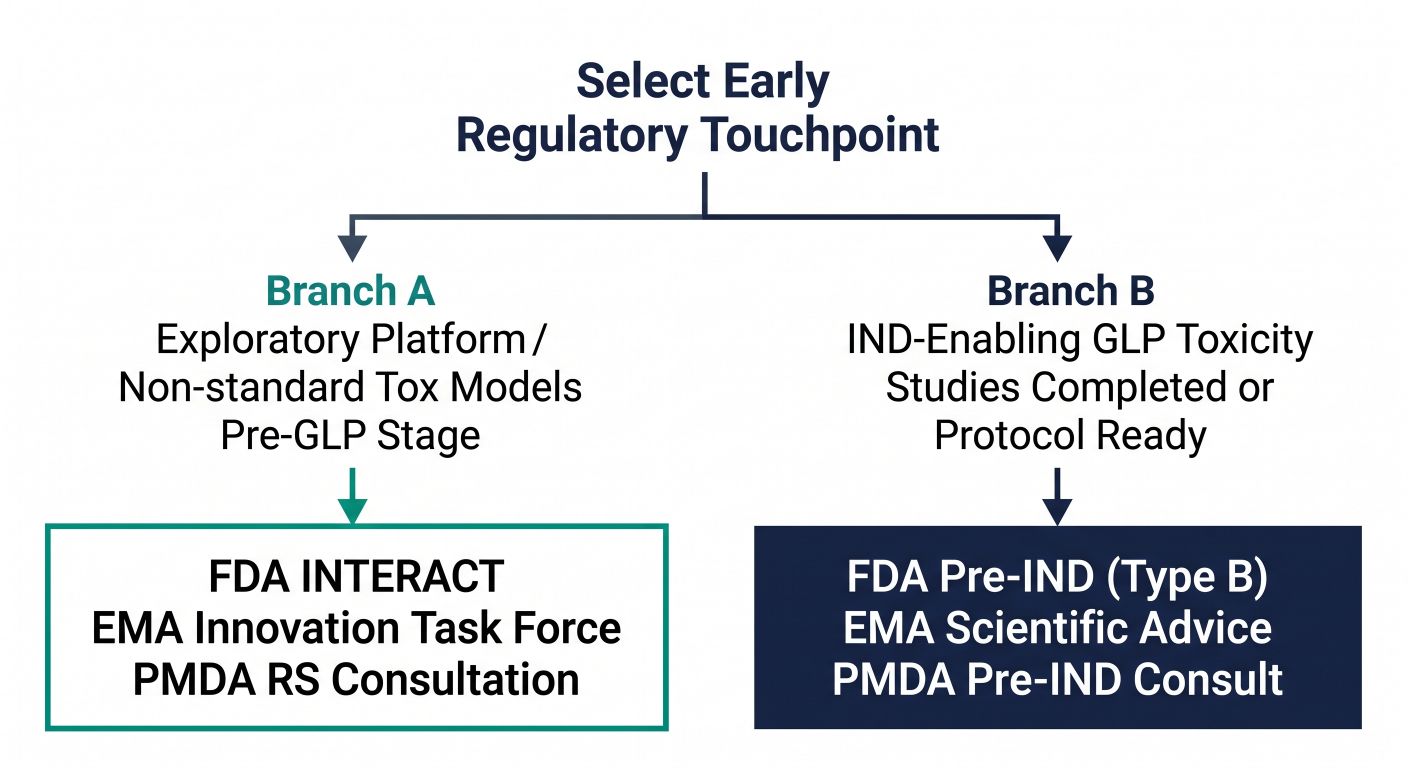
Figure 1: Early-Stage Regulatory Decision Framework for Preclinical Candidates
Section I: US FDA Early Engagement Engine — INTERACT vs. Pre-IND
The US FDA provides two distinct formal mechanisms for early-stage development guidance prior to an IND submission. Under the PDUFA VII commitment letter, both pathways carry specific performance targets and submission requirements. Selecting the correct pathway depends entirely on the maturity of the nonclinical safety and Chemistry, Manufacturing, and Controls (CMC) datasets. For detailed decision criteria on choosing between 50-day Type D and 75-day Type C mid-stage pathways, see our Global Regulatory Matrix analysis in Article 1.
1. INTERACT Meetings (Initial Targeted Engagement for Regulatory Advice)
- Target Timing & PDUFA VII Benchmark: Early preclinical candidate selection or platform evaluation—well before initiating definitive GLP toxicology studies. The FDA responds within 21 calendar days and targets scheduling or issuing a Written Response Only (WRO) within 75 calendar days. Note that the complete briefing package must be submitted with the meeting request.
- Eligible Technical Scope:
- Testing strategies for novel modalities (cell and gene therapies, mRNA constructs, tissue-engineered products, complex biological conjugates, or targeted radiopharmaceuticals) where standard regulatory testing paradigms do not apply.
- Validation and scientific rationale for non-standard animal toxicity models or novel species selection when standard species lack target cross-reactivity.
- Biocompatibility, delivery device integration, or early complex CMC characterization (e.g., novel viral vector capsids, lipid nanoparticle formulations, or bioanalytical potency assay development).
- Primary Pitfall: The FDA routinely denies INTERACT requests if the candidate is already mature enough for a standard Pre-IND meeting, or if the sponsor submits concrete clinical trial protocols rather than exploratory translational testing strategies.
2. Pre-IND Meetings (PDUFA VII Type B Milestone)
- Target Timing & PDUFA VII Benchmark: Conducted approximately 4 to 6 months prior to planned IND submission, after key nonclinical proof-of-concept and non-GLP pilot toxicology studies are complete, and GLP toxicology protocols or datasets are established. Response target is 21 days; meeting target is 60 calendar days.
- Key Strategic Objectives:
- Securing agency concurrence that completed/planned GLP nonclinical safety packages support human exposure without risking a clinical hold.
- Reaching formal alignment on the FIH Starting Dose Rationale, including safety margins and escalating dose-ranging criteria.
- Confirming phase-appropriate CMC characterization, batch release specs, analytical stability, and bioanalytical assay validation for human bioanalysis.
- Reviewing the Phase 1 clinical protocol design, including patient inclusion/exclusion criteria, safety stopping rules, and monitoring windows.
Section II: Global Early-Stage Regulatory Touchpoints
Achieving global regulatory synchronization during preclinical translation allows biotechs to execute multi-jurisdictional Phase 1 clinical strategies without duplicating nonclinical safety testing or CMC development workloads.
Table 1: Global Early-Stage Consultation Pathways & Operational Benchmarks
| Agency | Pathway Name | Development Stage | Target Lead Time | Primary Focus Area |
|---|---|---|---|---|
| US FDA | INTERACT Type B (Pre-IND) |
Pre-GLP Concept IND-Enabling Ready |
75 Days 60 Days |
Novel nonclinical models & platform CMC; GLP tox alignment & FIH starting dose rationale. |
| EU EMA | Innovation Task Force (ITF) Scientific Advice (SAWP) |
Pre-GLP Exploratory Pre-CTA Submission |
Informal Schedule 40-70 Days |
Informal briefing on novel technologies; formal binding advice on nonclinical safety & Phase 1 CTA design. |
| UK MHRA | Innovation Passport (ILAP) National Scientific Advice |
Preclinical / Early Clinical Pre-CTA Submission |
30-60 Days 30-60 Days |
Accelerated development pathway entry; flexible scientific advice on nonclinical tox & FIH design. |
| JP PMDA | RS Consultation Pre-IND Consultation |
Pre-GLP Discovery Pre-CTN Submission |
30-60 Days 30-60 Days |
Regulatory science advice for novel platforms; mandatory alignment on FIH starting dose & local ethnic factors (ICH E5). |
| CN NMPA | Class I Communication | Pre-IND Filing | 30 Days | Formal CDE communication for first-in-class molecules or breakthrough platforms prior to China IND filing. |
Section III: The Translational Core — Defending FIH Starting Dose Strategy
The selection and justification of the First-in-Human starting dose is the single most critical clinical pharmacology element in an early-stage regulatory briefing book. Presenting an unjustified starting dose is one of the leading triggers for FDA Phase 1 clinical holds. Applying the proactive briefing book framing principles detailed in Article 1 (“We propose X based on Y; does the Agency agree?”), sponsors should avoid asking open-ended questions about initial clinical doses.
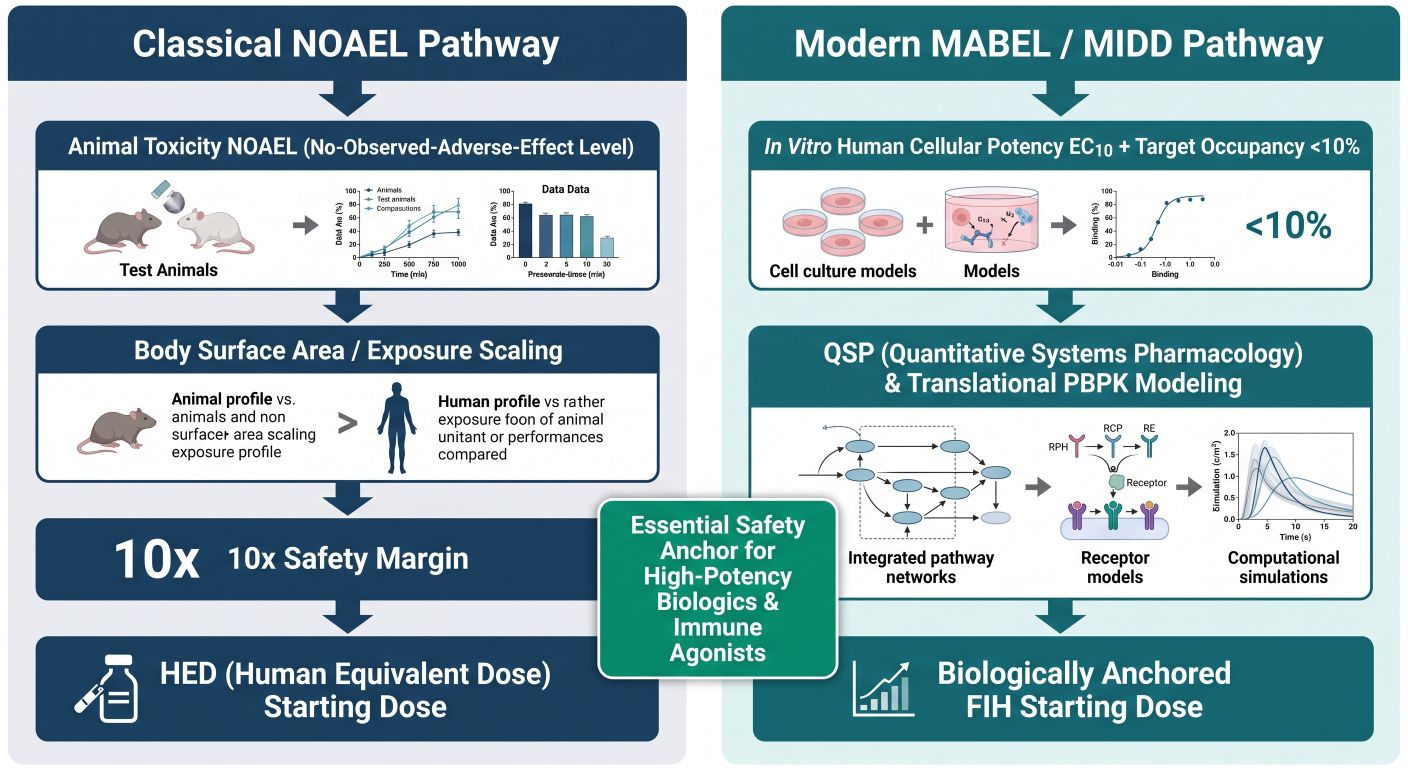
Figure 2: NOAEL vs. MABEL & MIDD Starting Dose Derivation Pathways
1. NOAEL vs. MABEL Rationale
-
No Observed Adverse Effect Level (NOAEL):
Historically applied to conventional small molecules. The starting dose is calculated by converting the animal NOAEL to a Human Equivalent Dose (HED) based on body surface area (mg/m2) or exposure (AUC), applying a standard 10-fold safety factor.
Regulatory Risk: NOAEL approaches introduce severe safety risks when applied to high-potency biologics, T-cell engagers, immune-modulating agonists, or novel targeted therapies where catastrophic biological responses occur far below animal toxicity thresholds. -
Minimum Anticipated Biological Effect Level (MABEL):
Mandatory for high-risk novel modalities and potent immunomodulators (under ICH S9 / FDA guidelines). MABEL integrates human cell-based in vitro assays, target binding affinity (Kd), receptor occupancy curves, and translational exposure modeling.
Core Objective: The FIH starting dose is anchored at an exposure level predicted to yield minimal biological activity (e.g., EC10 or ≤ 10% target occupancy) rather than an arbitrary fraction of animal toxicity.
2. Deploying Model-Informed Drug Development (MIDD) in Pre-IND Packages
Modern Pre-IND briefing packages leverage quantitative modeling toolkits to defend starting dose safety margins:
- Translational PBPK Modeling: Predicts human pharmacokinetics (clearance, volume of distribution) by integrating cross-species allometric scaling with in vitro human tissue distribution kinetics.
- Quantitative Systems Pharmacology (QSP): Mechanistically links target binding affinity, signal transduction cascades, and biomarker dynamics to project human exposure-response curves and safety windows prior to human dosing.
Section IV: Case Study — Early Engagement & FIH Clearance Strategy
Translational Challenge: De-Risking a High-Affinity Bispecific Agonist
A midsize biotech candidate developed a novel bispecific antibody targeting a tumor-associated antigen and an immune-activating receptor. Due to species-specific binding differences, standard rodent species lacked target cross-reactivity. The sponsor identified cynomolgus monkeys as the single relevant species, but observed potent in vitro cytokine release in human peripheral blood mononuclear cells (PBMCs) at sub-nanomolar concentrations.
Execution Roadmap:
- FDA INTERACT Meeting (12 Months Pre-IND): Aligned on single-species toxicology rationale and secured agreement to use human in vitro PBMC cytokine release assays to establish safety margins.
- Translational QSP Modeling: Built a mechanistic QSP model integrating human in vitro cytokine release curves (EC10) and target binding affinity (Kd = 0.8 nM) to project human exposure limits.
- FDA Pre-IND Meeting (Type B, 5 Months Pre-IND): Presented a proactive proposal for a MABEL-derived FIH starting dose yielding < 5% target occupancy at Cmax, backed by a sentinel cohort dosing protocol and cytokine monitoring plan.
Strategic Value Delivered:
The FDA concurred with the MABEL starting dose and Phase 1 trial protocol without requesting additional animal safety studies—saving an estimated $2.5M in nonclinical expenditures and achieving clinical trial clearance without a clinical hold.
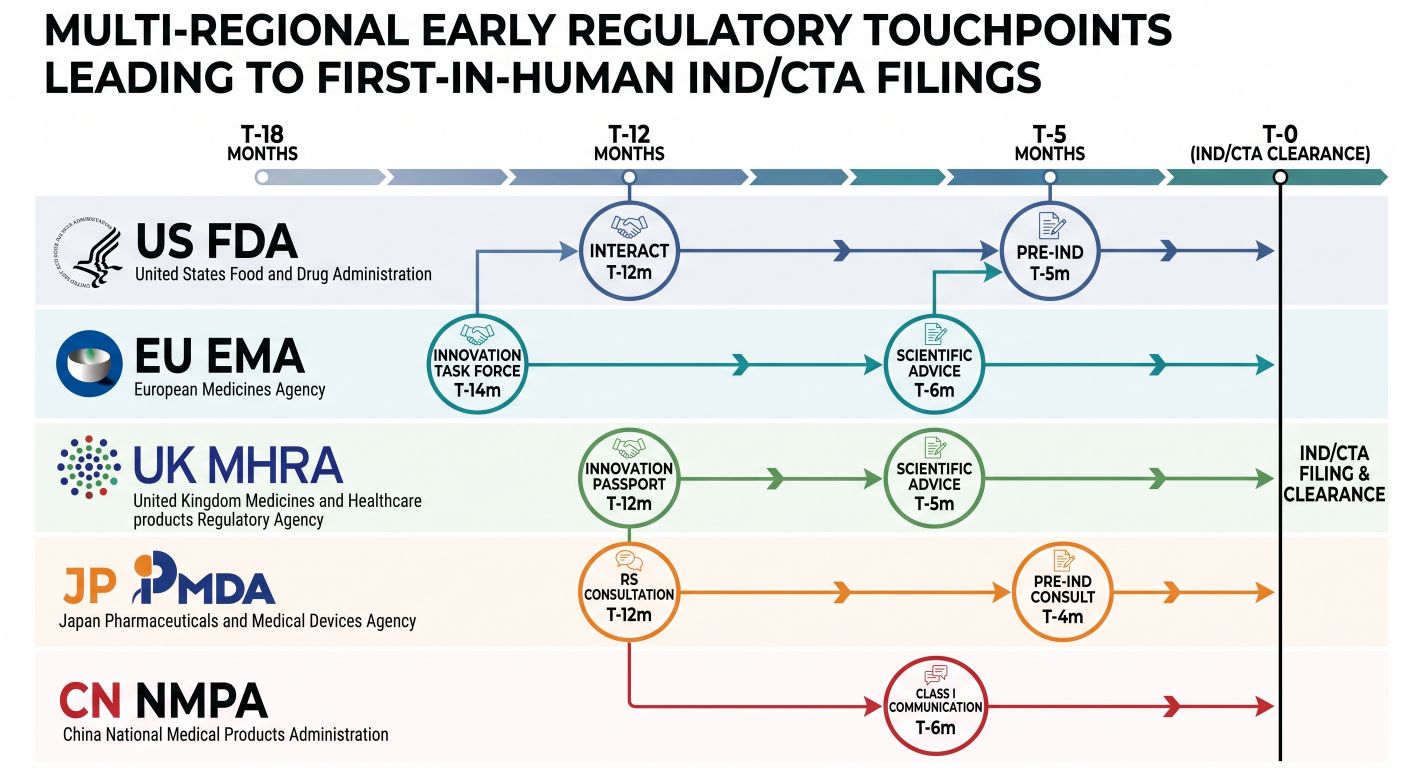
Figure 3: Global Pre-IND/CTA Synchronization Timeline Across 5 Major Authorities
Abbreviations
AUC: Area Under the Curve
CBER: Center for Biologics Evaluation and Research
CDER: Center for Drug Evaluation and Research
CDE: Center for Drug Evaluation (China NMPA)
CHMP: Committee for Medicinal Products for Human Use (EMA)
CMC: Chemistry, Manufacturing, and Controls
CTA: Clinical Trial Application
CTN: Clinical Trial Notification (Japan PMDA)
EMA: European Medicines Agency
FDA: Food and Drug Administration (USA)
FIH: First-In-Human
GLP: Good Laboratory Practice
HED: Human Equivalent Dose
ILAP: Innovative Licensing and Access Pathway (UK)
IND: Investigational New Drug
INTERACT: Initial Targeted Engagement for Regulatory Advice on CBER/CDER Products
ITF: Innovation Task Force (EMA)
MABEL: Minimum Anticipated Biological Effect Level
MHRA: Medicines and Healthcare products Regulatory Agency (UK)
MIDD: Model-Informed Drug Development
NOAEL: No Observed Adverse Effect Level
NMPA: National Medical Products Administration (China)
PBMC: Peripheral Blood Mononuclear Cell
PBPK: Physiologically Based Pharmacokinetics
PDUFA: Prescription Drug User Fee Act
PMDA: Pharmaceuticals and Medical Devices Agency (Japan)
QSP: Quantitative Systems Pharmacology
RS: Regulatory Science (PMDA Consultation)
SAWP: Scientific Advice Working Party (EMA)
WRO: Written Response Only
Technical & Regulatory References
- U.S. Food and Drug Administration (FDA). (2023). Formal Meetings Between the FDA and Sponsors or Applicants of PDUFA Products Guidance for Industry. Center for Drug Evaluation and Research (CDER) / CBER.
- U.S. Food and Drug Administration (FDA). (2023). PDUFA Reauthorization Performance Goals and Procedures Fiscal Years 2023 Through 2027 (PDUFA VII). Section I.I: INTERACT & Type B Meetings.
- European Medicines Agency (EMA). (2023). Innovation Task Force (ITF) Guidance for Applicants on Emerging Technologies. EMA/CHMP/ITF/1029/04.
- International Council for Harmonisation (ICH). (2009). ICH M3(R2) Nonclinical Safety Studies for the Conduct of Human Clinical Trials and Marketing Authorization for Pharmaceuticals.
- UK Medicines and Healthcare products Regulatory Agency (MHRA). (2021). Innovative Licensing and Access Pathway (ILAP) Procedural Guide.