
Global Regulatory Engagement Series
This executive series provides startup and midsize biotech leaders with actionable, cross-functional blueprints for engaging global regulatory authorities (FDA, EMA, MHRA, PMDA, NMPA) across preclinical, translational, and clinical drug development.
| Article Sequence | Thematic Focus | Status |
|---|---|---|
| Article 1 (Current) | Navigating the Global Regulatory Matrix: A Strategic Guide to FDA, EMA, MHRA, PMDA, and NMPA Meetings | Published |
| Article 2 | Early Engagement: Maximizing INTERACT, Pre-IND, and Innovation Task Force Touchpoints | Upcoming |
| Article 3 | Mid-Stage Mastery: EOP2 Meetings, Project Optimus Dose Selection, and Pivotal Protocol Alignment | Upcoming |
| Article 4 | Registration & Beyond: Pre-NDA/BLA Meetings, Global Dossier Synchronization, and Post-Marketing Commitments | Upcoming |
Navigating the Global Regulatory Matrix: A Strategic Guide to FDA, EMA, MHRA, PMDA, and NMPA Meetings for Biotech Founders
Executive Summary: Regulatory Engagement as a Value-Creation Engine
In the high-stakes environment of early-stage biotechnology, regulatory interactions are frequently misconstrued as administrative hurdles or compliance checkpoints. For startup and midsize biotechs operating with lean internal teams and tight capital runways, every formal interaction with a global regulatory authority represents a major valuation and de-risking milestone.
Aligning with regulatory agencies at critical developmental junctures accomplishes far more than securing permission to proceed:
- Capital Protection: Clear regulatory concurrence validates program viability for venture investors, directly unlocking financing rounds or pharma licensing partnerships.
- Timeline Optimization: Early alignment prevents catastrophic regulatory setbacks—such as Phase 1 clinical holds, unexpected demands for redundant animal toxicity studies, or late-stage dosage amendments under initiatives like FDA Project Optimus.
- Global Synchronization: Establishing an integrated regulatory strategy across major jurisdictions prevents fragmented clinical development programs that delay international commercialization.
However, the global regulatory landscape has grown increasingly complex. With procedural updates under the Prescription Drug User Fee Act (PDUFA VII) in the United States, alongside evolving consultation pathways across the European Union (EMA), the United Kingdom (MHRA), Japan (PMDA), and China (NMPA), biotech executives face a dizzying array of meeting classifications. Misclassifying a regulatory meeting—such as submitting an over-scoped request for a narrow technical topic—can burn 3 to 6 months of capital runway. This guide provides a comprehensive operational blueprint for navigating global regulatory meetings across preclinical, translational, and clinical drug development.
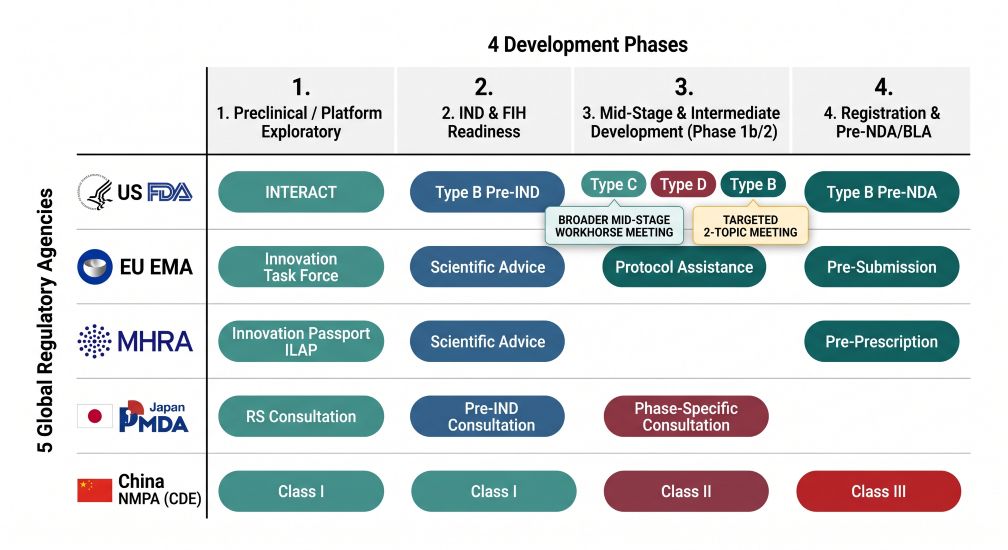
Figure 1: The Global Regulatory Meeting Lifecycle Matrix Across 5 Major Authorities
Section I: The US FDA Meeting Taxonomy Under PDUFA VII
The United States Food and Drug Administration (FDA) remains the primary anchor authority for global drug development strategies. Under the PDUFA VII commitment letter, the FDA updated its meeting taxonomy to provide targeted engagement mechanisms for modern therapeutic modalities. Understanding the strict boundaries, timelines, and discipline limits of each FDA meeting type is essential for maximizing regulatory efficiency.
-
1. INTERACT Meetings (Initial Targeted Engagement for Regulatory Advice on CBER/CDER Products):
Non-binding, early-stage exploratory dialogue for novel platforms, complex cell and gene therapies, advanced biologics, or unique nonclinical safety models. Conducted long before a formal Pre-IND meeting when a candidate lacks a definitive toxicity study package. Focuses on novel toxicity models, complex CMC constructs, and precedent-setting safety risks. -
2. Type A Meetings (Critical-Path Unblocking):
Urgent interactions reserved strictly for stalled programs. PDUFA VII benchmark target is 30 calendar days for meeting execution or Written Response Only (WRO). Primary use cases include resolving formal Clinical Holds placed on Investigational New Drug (IND) applications, post-action Complete Response Letter (CRL) discussions, or formal dispute resolutions regarding Special Protocol Assessments (SPAs). -
3. Type B & Type B (End-of-Phase / EOP) Meetings (Major Milestone Anchors):
Foundational milestone meetings across the drug development lifecycle with a 60-calendar-day target timeline under PDUFA VII:- Pre-IND Meetings: Securing agreement that proposed nonclinical GLP safety packages, CMC analytical validation, bioanalytical suites, and Phase 1 FIH protocols support human dosing without risking a clinical hold. Requires a defensible Starting Dose Rationale based on MABEL or NOAEL thresholds.
- End-of-Phase 1 (EOP1) & End-of-Phase 2 (EOP2) Meetings: Aligning on pivotal trial design, primary/secondary endpoints, statistical analysis plans, and registrational CMC scale-up. Under FDA Project Optimus, EOP2 meetings are the primary venue for presenting multi-arm dose-optimization data, exposure-response (E-R) modeling, and population PK (PopPK) analyses to justify selected Phase 3 doses over MTD paradigms.
- Pre-NDA / Pre-BLA Meetings: Operational alignment on Common Technical Document (CTD) dossier architecture, Integrated Summaries of Safety and Efficacy (ISS/ISE), dataset formatting (SDTM/ADaM), and target filing schedules prior to marketing submission.
-
4. Type C Meetings (Mid-Stage Development Workhorse):
Type C meetings serve as the primary, flexible engagement mechanism for intermediate development questions that fall outside major milestone boundaries. Operating on a 75-calendar-day PDUFA VII target timeline, Type C meetings accommodate multi-disciplinary technical inquiries across mid-stage clinical development.Key Clinical Pharmacology, DMPK, and Translational Triggers for Type C Engagement:
- Metabolite Safety Testing (MIST): Evaluating human-disproportionate circulating drug metabolites under ICH M3(R2) and FDA MIST guidance prior to pivotal trial initiation, ensuring nonclinical safety coverage is adequate without delaying clinical progression.
- Organ Impairment Trial Design: Aligning on protocol designs, inclusion criteria, and PopPK covariate modeling plans for dedicated renal or hepatic impairment studies.
- Pediatric Development Strategy: Reviewing initial Pediatric Study Plans (iPSP) or pediatric deferral/waiver rationale with CDER/CBER review divisions.
- Mid-Stage Protocol Amendments & Biomarker Strategy: Securing concurrence on major Phase 2 protocol expansions, novel surrogate biomarker validation, or companion diagnostic co-development strategies.
-
5. Type D Meetings (Targeted, Rapid-Turnaround Technical Queries):
Introduced under PDUFA VII to address narrow, focused technical topics with a rapid 50-calendar-day target turnaround. Restricted to no more than 2 focused topics and no more than 3 FDA review disciplines. High-value use cases include securing agreement on PBPK DDI modeling strategies or c-QTc exposure-response analyses to waive dedicated clinical trials.
Strategic Trade-Offs: Choosing Between Type C and Type D Meetings
With the addition of Type D meetings under PDUFA VII, biotech teams must carefully evaluate query scope before submitting meeting requests:
| Decision Parameter | FDA Type D Meeting | FDA Type C Meeting |
|---|---|---|
| Turnaround Time | 50 Calendar Days | 75 Calendar Days |
| Scope Limits | Strictly ≤ 2 focused topics | Flexible / Multi-topic permissible |
| Discipline Limits | Strictly ≤ 3 review disciplines | Broad cross-disciplinary integration |
| Rejection Risk | High if over-scoped (FDA will reclassify or deny) | Low (Standard catch-all meeting classification) |
| Optimal Use Cases | Single-model verification (PBPK DDI or c-QTc biowaivers), isolated analytical CMC changes. | MIST nonclinical safety coverage, organ impairment study designs, iPSP submission, complex Phase 2 amendments. |
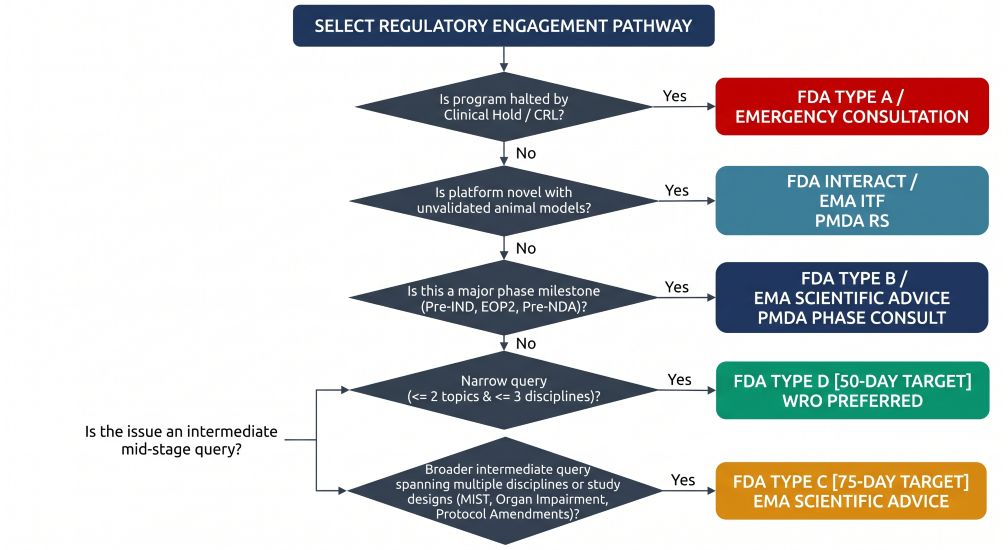
Figure 2: Executive Decision Tree: Selecting the Optimal Regulatory Meeting Pathway
Section II: International Regulatory Meeting Equivalents
While the US FDA handles a significant volume of early biotech filings, global commercial success requires early alignment with international regulatory authorities. Navigating European, British, Japanese, and Chinese regulatory frameworks requires mapping their specific consultation pathways to your global development milestones.
Table 1: Global Regulatory Meeting Taxonomy & Performance Benchmarks
| Agency | Meeting Classification | Target Lead Time | Standard Feedback Format | Primary Development Scope |
|---|---|---|---|---|
| US FDA | INTERACT Type A Type B / Type B(EOP) Type C Type D |
21 Days (Grant/Deny) 30 Days 60 Days 75 Days 50 Days |
Written Response or Teleconference / Face-to-Face | Early exploratory platforms, holds/disputes, milestone transitions (Pre-IND, EOP2, Pre-NDA), mid-stage multi-discipline queries (MIST, organ impairment), and narrow 1-2 topic technical queries. |
| EU EMA | Innovation Task Force (ITF) Scientific Advice (SAWP) Protocol Assistance |
40-70 Days 40-70 Days (Standard 2-month cycle) |
Informal Briefing / Formal CHMP Written Report | Informal early guidance on innovative technologies, formal scientific advice on quality/nonclinical/clinical design, and specialized advice for Orphan Drugs. |
| UK MHRA | Innovation Passport (ILAP) National Scientific Advice |
30-60 Days | Written Advice Document or Virtual Consultation | Accelerated market access pathway entry (ILAP) and flexible, cross-stage scientific advice covering quality, nonclinical, and clinical development. |
| JP PMDA | RS Consultation Pre-IND Consultation Phase-Specific Consult. |
30-60 Days (Pre-consultation required) | Formal Face-to-Face Meeting & Minutes | Regulatory Science exploratory advice, CTN preparation, FIH starting dose rationale, and Japanese population bridging strategy evaluation. |
| CN NMPA | Class I Communication Class II Communication Class III Communication |
30 Days 60 Days 75 Days |
Formal Meeting or Written Consultation Report | Breakthrough designations/Clinical holds, key clinical phase milestones (EOP2), and pre-NDA filing dataset/dossier alignment. |
Table 2: Purpose-Driven Meeting Selection Matrix Across 5 Key Regions
| Development Objective | US FDA | EU EMA | UK MHRA | JP PMDA | CN NMPA |
|---|---|---|---|---|---|
| Early Platform Novelty / Non-standard Tox Model | INTERACT | Innovation Task Force (ITF) | Innovation Passport (ILAP) | RS Consultation | Class I Communication |
| FIH Starting Dose & GLP Tox Package Alignment | Type B (Pre-IND) | Scientific Advice (SAWP) | National Scientific Advice | Pre-IND Consultation | Class I Communication |
| Targeted Technical Waiver (PBPK DDI / c-QTc) | Type D | Scientific Advice (Focused) | National Scientific Advice | General Technical Consultation | Class II Communication |
| Mid-Stage Strategy (MIST / Organ Impairment) | Type C | Scientific Advice (SAWP) | National Scientific Advice | Mid-Phase Consultation | Class II Communication |
| Project Optimus Dose Selection & Pivotal Design | Type B (EOP2) | Protocol Assistance / CHMP Advice | National Scientific Advice | End-of-Phase 2 Consultation | Class II Communication |
| Pre-filing CTD Dossier & Dataset Formatting | Type B (Pre-NDA/BLA) | Pre-Submission Meeting | Pre-Prescription Meeting | Pre-NDA Consultation | Class III Communication |
Section III: Strategic Decision Engine — Choosing the Right Forum
For biotech leadership, deciding when, where, and how to engage a regulatory agency requires balancing scientific urgency against internal resources and regulatory exposure.
1. Scope vs. Discipline Limits
Before submitting a meeting request, sponsors must map their questions across four technical disciplines: CMC/Quality, Nonclinical Safety, Clinical Pharmacology/Pharmacometrics, and Clinical Strategy/Biostatistics.
Operational Scope Rule:
If your questions span all four technical disciplines across major lifecycle transitions, you require a broad milestone meeting—such as a Type B (Pre-IND/EOP2) or EMA Scientific Advice meeting. If your query is a mid-stage issue spanning 2 to 3 disciplines (e.g., MIST nonclinical safety plus ClinPharm organ impairment protocol timing), request a Type C meeting. If your query is tightly restricted to 1 or 2 disciplines (e.g., Clinical Pharmacology PBPK modeling for a DDI biowaiver), leverage a Type D or targeted MHRA Scientific Advice request to save 25 days of lead time.
2. Meeting Formats: Face-to-Face vs. Virtual vs. Written Response Only (WRO)
PDUFA VII formalized Written Response Only (WRO) as a primary mechanism for regulatory feedback. While biotech teams often reflexively request live teleconferences, WRO formats carry distinct operational advantages for focused technical topics:
- Written Response Only (WRO): Ideal for highly technical, unambiguous questions supported by clear modeling or analytical packages (e.g., c-QTc biowaivers, analytical comparability). WRO eliminates the risk of off-the-cuff verbal misinterpretations during live meetings and provides definitive, written agency position statements.
- Virtual Teleconference / Face-to-Face: Reserved for complex, subjective, or high-risk milestone discussions (e.g., EOP2 trial design, novel biomarker primary endpoints, or clinical hold resolutions) where real-time negotiation and dialogue are critical to reaching alignment.
Section IV: Briefing Book Architecture & Best Practices
The briefing book is the single most important document in regulatory engagement. Regulatory reviewers judge the scientific maturity and competence of a biotech sponsor based entirely on the quality, structure, and rigor of their briefing package.
Figure 3: The Multi-Disciplinary Regulatory Briefing Package Architecture
The Golden Rule of Regulatory Framing
The single most common mistake made by inexperienced biotech founders is presenting open-ended questions to regulatory bodies. Never ask the FDA or international agencies “What should we do?” Always state: “We propose [Strategy X] based on [Data Y and Scientific Rationale Z]; does the Agency agree?” When a sponsor presents a definitive, data-backed proposal, the agency’s review shifts from defining strategy to evaluating the scientific validity of the sponsor’s position.
Table 3: The Anatomy of a High-Impact Briefing Book Question
| Technical Discipline | ❌ Weak Open-Ended Framing | 🟢 High-Impact Proactive Proposal |
|---|---|---|
| CMC & Quality | “What stability testing acceptance criteria should we use for our Phase 1 clinical trial supplies?” | “We propose drug product stability acceptance criteria outlined in Table 3.2 based on 6-month accelerated data under ICH Q1A(R2) conditions. Does the Agency agree?” |
| Nonclinical Safety | “Which animal species should we use for our pivotal GLP toxicology studies?” | “Based on target sequence homology, receptor affinity (Kd = 1.2 nM human vs 1.5 nM cynomolgus), and primary hepatocyte profiles, we propose cynomolgus monkey as the single relevant non-rodent tox species. Does the Agency agree?” |
| Clinical Pharmacology | “How should we determine our First-in-Human starting dose?” | “We propose an FIH starting dose of 10 mg (0.14 mg/kg), incorporating a 10-fold safety margin below projected human MABEL derived from in vitro human T-cell activation assays (EC10) and translational QSP modeling. Does the Agency agree?” |
| Clinical Strategy | “Is our Phase 2 patient cohort size adequate to show efficacy?” | “We propose a Phase 2 cohort size of n=40 patients per arm, providing 80% statistical power (alpha = 0.05) to detect a 25% difference in primary response rate relative to standard-of-care (Section 8.2). Does the Agency agree?” |
Section V: Case Study — Deploying Focused Regulatory Meetings for Clinical Pharmacology Biowaivers
1. Real-World Precedent: Pemigatinib (Pemazyre® – Incyte Corporation)
During the development of pemigatinib (INCB054828, NDA 213736), an oral selective FGFR1–3 inhibitor approved for cholangiocarcinoma, the sponsor encountered complex metabolic and transporter-mediated clearance liabilities. Pemigatinib is predominantly metabolized by CYP3A4, with additional potential interaction liabilities involving drug transporters such as P-glycoprotein (P-gp) and organic cation transporter 2 (OCT2).
Rather than conducting dedicated clinical trial arms for every potential transporter or moderate/weak metabolic pathway, Incyte engaged the FDA through a dedicated Type C Clinical Pharmacology Meeting under IND 124358:
- PBPK Transporter & DDI Biowaiver Package: Incyte constructed a physiologically based pharmacokinetic (PBPK) model—validated against clinical anchor DDI studies using itraconazole (strong CYP3A inhibitor) and rifampin (strong CYP3A inducer)—to characterize drug interaction potential and evaluate P-gp and OCT2 inhibition risks.
- Concentration-QTc (c-QTc) Modeling Waiver: Incyte submitted an exposure-response c-QTc modeling analysis using Phase 1/2 dense ECG and matching plasma concentration data to evaluate cardiac repolarization risks, securing FDA concurrence to waive a standalone Thorough QTc (TQT) clinical study.
As documented in the official FDA Administrative Correspondence and Clinical Pharmacology reviews, the Agency concurred that these validated modeling packages were sufficient to satisfy regulatory requirements without requiring redundant clinical trial arms.
2. The PDUFA VII Strategic Translation: Navigating Type C vs. Type D Selection
Historically, sponsors like Incyte relied on 75-day Type C meetings because no rapid mechanism existed for focused technical topics. Under today’s PDUFA VII framework, biotech teams can strategically select between a Type C and Type D engagement depending on package breadth:
Modern Decision Playbook for Biotechs:
- Select Type D for Targeted Biowaivers (50-Day Target): If your query is strictly limited to a single verified PBPK DDI model or c-QTc exposure-response analysis involving only Clinical Pharmacology and Pharmacometrics, submit a Type D request to gain concurrence in 50 days.
- Select Type C for Broader Mid-Stage Packages (75-Day Target): If your modeling package includes nonclinical metabolite safety evaluations (MIST), proposed organ impairment study protocols, or multi-disciplinary clinical amendments, submit a Type C request to avoid over-scoping rejection risks.
- Strategic Value Outcome: Proactively securing alignment through a Type C or Type D meeting waives 2 to 3 standalone clinical trials, saving $3M–$5M in direct clinical costs and accelerating NDA/BLA submission readiness by 8 to 12 months.
Abbreviations
BLA: Biologics License Application
CBER: Center for Biologics Evaluation and Research
CDER: Center for Drug Evaluation and Research
CDE: Center for Drug Evaluation (China NMPA)
CHMP: Committee for Medicinal Products for Human Use (EMA)
CMC: Chemistry, Manufacturing, and Controls
c-QTc: Concentration-QTc Modeling
CTD: Common Technical Document
DDI: Drug-Drug Interaction
DMPK: Drug Metabolism and Pharmacokinetics
EMA: European Medicines Agency
EOP2: End-of-Phase 2
FDA: Food and Drug Administration (USA)
FIH: First-In-Human
GLP: Good Laboratory Practice
ILAP: Innovative Licensing and Access Pathway (UK)
IND: Investigational New Drug
INTERACT: Initial Targeted Engagement for Regulatory Advice on CBER/CDER Products
iPSP: Initial Pediatric Study Plan
MABEL: Minimum Anticipated Biological Effect Level
MHRA: Medicines and Healthcare products Regulatory Agency (UK)
MIST: Metabolite Safety Testing (ICH M3(R2))
NDA: New Drug Application
NMPA: National Medical Products Administration (China)
NOAEL: No Observed Adverse Effect Level
PBPK: Physiologically Based Pharmacokinetics
PDUFA: Prescription Drug User Fee Act
PMDA: Pharmaceuticals and Medical Devices Agency (Japan)
PopPK: Population Pharmacokinetics
QSP: Quantitative Systems Pharmacology
SAWP: Scientific Advice Working Party (EMA)
TQT: Thorough QTc Study
WRO: Written Response Only
Technical & Regulatory References
- U.S. Food and Drug Administration (FDA). (2023). PDUFA Reauthorization Performance Goals and Procedures Fiscal Years 2023 Through 2027 (PDUFA VII). Section I.I: Formal Meetings.
- U.S. Food and Drug Administration (FDA). (2020). Pemigatinib (Pemazyre) NDA 213736 Administrative and Correspondence Documents / Clinical Pharmacology Review. Center for Drug Evaluation and Research.
- European Medicines Agency (EMA). (2023). Scientific Advice and Protocol Assistance: Guidance for Applicants. EMA/CHMP/SAWP/440/02 Rev. 11.
- Ji, T., et al. (2021). Evaluation of drug-drug interactions of pemigatinib in healthy participants. Cancer Chemotherapy and Pharmacology, 88(5), 843–853.
- UK Medicines and Healthcare products Regulatory Agency (MHRA). (2021). Innovative Licensing and Access Pathway (ILAP) Guidance.