
The Modality Matrix Series Portfolio
This concluding synthesis report integrates the technical, bioanalytical, and pharmacometric requirements across all six core therapeutic modalities into a unified strategic roadmap for Phase 1 IND readiness and early dosage optimization under FDA Project Optimus.
| Article Sequence | Thematic Focus | Status |
|---|---|---|
| Article 1 | Overview of Modalities and the Clinical Pharmacology Plan | Published |
| Article 2 | Small Molecule PK and Bioavailability | Published |
| Article 3 | Large Molecule Biologics and Subcutaneous Delivery | Published |
| Article 4 | Antibody-Drug Conjugates (ADCs) and Multi-Analyte PK | Published |
| Article 5 | Oligonucleotide Therapeutics (ASOs, siRNAs, LNPs) | Published |
| Article 6 | Targeted Radionuclide Therapies (TRTs) and Theranostics | Published |
| Synthesis Report | From Vector to Exposure: Master Synthesis Across 6 Modalities | Current Report |
Introduction: The Paradigm Shift in Modern Quantitative Clinical Pharmacology
The historical paradigm of drug development evaluated chemical entities through a uniform lens: administer a fixed or weight-based dose, quantify plasma drug clearance over time, and correlate systemic exposure directly with toxicity or efficacy. While this empirical approach sufficed for classic small molecules, the rapid proliferation of novel bio-engineered modalities has rendered traditional pharmacokinetic assumptions obsolete.
Modern drug candidates function as complex delivery vehicles, catalytic protein degraders, cellular programs, or localized radiation sources. A therapeutic vector may vacate systemic plasma in minutes while its pharmacodynamic effect, tissue accumulation, or cell proliferation persists for months. Consequently, clinical pharmacology has evolved from a descriptive secondary discipline into an active, quantitative engineering process.
Under modern regulatory frameworks such as FDA Project Optimus, sponsors can no longer rely on empirical 3+3 dose escalation designs or toxicity-bound Maximum Tolerated Dose (MTD) endpoints. Early-stage biotechs must construct a modality-specific Clinical Pharmacology Plan (CPP) that defines the Optimal Biological Dose (OBD) based on site-of-action exposure, Target-Mediated Drug Disposition (TMDD), intracellular processing, and dynamic exposure-response relationships.
This synthesis consolidates the technical, bioanalytical, and pharmacometric requirements across six core therapeutic modalities into a unified strategic roadmap for First-in-Human (FIH) IND readiness and late-stage approval.
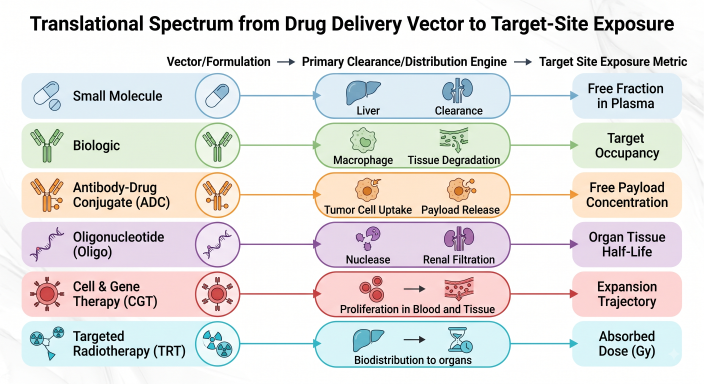
Figure 1: The Translational Spectrum: From Delivery Vector to Target-Site Exposure Across 6 Modalities
Section 1: Cross-Modality DMPK & Exposure Drivers
Each therapeutic modality operates under distinct biophysical constraints that dictate its absorption, distribution, metabolism, and excretion (ADME) profile:
- Small Molecules: Clearance is governed primarily by hepatic cytochrome P450 (CYP) enzymes, phase II conjugating enzymes, and renal/biliary drug transporters. Systemic plasma concentration serves as an effective surrogate for unbound tissue exposure, making allometric scaling and classical compartment modeling highly predictive.
- Large Molecule Biologics (mAbs): Clearance is dictated by target abundance via Target-Mediated Drug Disposition (TMDD) at low concentrations, and non-specific endocytosis followed by neonatal Fc receptor (FcRn) recycling at high concentrations. Volume of distribution is restricted primarily to vascular and interstitial spaces.
- Antibody-Drug Conjugates (ADCs): Require tracking three distinct analytes in circulation: intact conjugate, total antibody, and free small-molecule payload. Clearance depends on antibody catabolism, Drug-to-Antibody Ratio (DAR) loss in plasma, and payload efflux via multidrug resistance transporters.
- Oligonucleotide Therapeutics (GalNAc siRNA / ASOs): Rapidly clear systemic circulation via tissue uptake or renal filtration within hours, accumulating in target organs (e.g., hepatocytes or CNS tissue) where tissue half-lives often exceed several weeks or months. Plasma Cmax reflects delivery efficiency, whereas tissue concentration dictates sustained gene silencing.
- Cell & Gene Therapies (CGTs): Traditional mass-based PK concepts are replaced by Cellular Kinetics (CK) and vector biodistribution. CAR-T cell expansion (Cmax, cell), persistence, and exhaustion govern therapeutic windows, while viral vector shedding and neutralizing antibody titers dictate transgene expression kinetics.
- Targeted Radionuclide Therapies (TRTs): Systemic plasma elimination does not correlate with therapeutic effect or organ toxicity. Pharmacokinetics must be converted into absorbed radiation dose (Grays) within target tumors and critical organ sinks (e.g., renal cortex, red bone marrow). Radioactive daughter recoil physics must be integrated for alpha-emitting isotopes.
Section 2: Master Modality Comparison Framework
To assist biotech leadership in structuring reviewer-ready dossier summaries (CTD Module 2.7.2 and Module 2.5), the operational and quantitative requirements across all six modalities are synthesized in the master decision matrices below.
Table 1: Master Modality Clinical Pharmacology & DMPK Comparison Matrix
| Modality | Primary Clearance Mechanism | Major Source of PK Non-Linearity | Primary Translational Modeling Engine | Core FDA Project Optimus Risk Focus |
|---|---|---|---|---|
| Small Molecules | Hepatic metabolism (CYP/UGT) and renal/biliary transport. | Transporter/enzyme saturation or non-linear plasma protein binding. | PBPK and Non-Linear Mixed Effects (NLME) PopPK. | Selecting doses below MTD that maintain continuous target coverage. |
| Large Biologics | Target-Mediated Drug Disposition (TMDD) and FcRn recycling. | Target saturation at low-to-intermediate plasma concentrations. | Quantitative Systems Pharmacology (QSP) and TMDD models. | Soluble target shedding and target expression modulation. |
| ADCs | Lysosomal catabolism, plasma deconjugation, payload clearance. | Deconjugation clearance dynamics and DAR distribution changes. | Integrated Multi-Analyte PK/PD and Bystander Effect models. | Off-target payload toxicity vs. on-target conjugate activity. |
| Oligonucleotides | Endosomal degradation and renal filtration. | Tissue binding saturation and receptor-mediated uptake (ASGPR). | Multi-Tissue PBPK modeling tissue-to-plasma partition ratios. | Long-term organ accumulation vs. transient plasma Cmax toxicities. |
| Cell & Gene Therapies | Immune-mediated clearance, cell apoptosis, vector degradation. | In vivo cell proliferation, target cell density, cytokine signaling. | Cellular Kinetics (CK) and Viral Vector Shedding models. | Immunogenicity-driven clearance and excessive cytokine release. |
| Theranostics / TRTs | Radiodecay, hepatobiliary excretion, renal filtration. | Radioligand specific activity and target geometry saturation. | Voxel-Based MIRD Dosimetry and Multi-Isotope PBPK. | Delayed radiation nephritis and red marrow toxicities. |
Table 2: Bioanalytical and Pharmacometric Requirements for Phase 1 IND Readiness
| Modality | Required Bioanalytical Suite | Key Translational Scaling Drivers | Critical Biomarkers for Exposure-Response | Recommended FIH Starting Dose Methodology |
|---|---|---|---|---|
| Small Molecules | LC-MS/MS for parent drug and major human circulating metabolites. | Free fraction (fu), in vitro intrinsic clearance (CLint), allometry. | Target occupancy assays, downstream phosphorylated proteins. | Human Equivalent Dose (HED) based on NOAEL with safety margin. |
| Large Biologics | Ligand Binding Assays (ELISA/ECL) and Anti-Drug Antibody (ADA) assays. | Target baseline expression, receptor turnover rate (kdeg), FcRn affinity. | Soluble target engagement, cytokine panel profiling. | Minimum Anticipated Biological Effect Level (MABEL). |
| ADCs | Multiplexed LC-MS/MS and LBA for conjugated payload, total mAb, free payload. | Payload potency, bystander cell killing capability, plasma linker stability. | Circulating free payload levels, target cell surface density. | MABEL or NOAEL adjusted for payload toxicity thresholds. |
| Oligonucleotides | Hybridization-ELISA, RT-qPCR, LC-MS/MS for intact oligonucleotides. | Liver/tissue extraction ratio, endosomal escape efficiency. | mRNA suppression, target protein knockdown kinetics. | Allometric scaling of organ tissue concentrations. |
| Cell & Gene Therapies | Flow cytometry (cell count), ddPCR/qPCR (transgene copies), NAb assays. | In vitro cytotoxicity assays, expansion capacity (T1/2, exp). | Transgene expression, serum cytokine profiles (IL-6, IFN-γ). | Weight-adjusted cellular dose derived from nonclinical expansion. |
| Theranostics / TRTs | Gamma scintillation counting, SPECT/PET quantitation, LC-MS/MS (chelator). | Single-cell microdosimetry, specific activity, tissue retention half-life. | Whole-body radioactivity retention, organ absorbed dose (Gy). | Microdosimetric threshold derived from organ-absorbed dose limits. |
Section 3: The Cross-Modality MIDD Toolkit Under FDA Project Optimus
Implementing Model-Informed Drug Development (MIDD) is essential to transition from empirical trial design to randomized dose optimization. Depending on the modality, the appropriate pharmacometric engine must be deployed early in lead optimization:
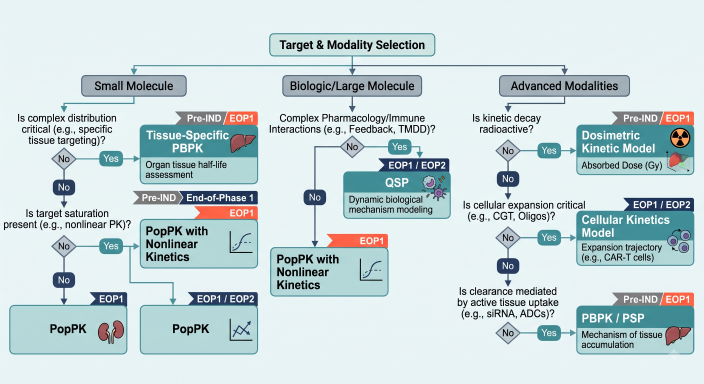
Figure 2: Executive Decision Tree: Selecting Pharmacometric Engines by Modality & Development Stage
- Physiologically Based Pharmacokinetics (PBPK): Essential for predicting drug-drug interactions (DDIs) in small molecules, liver distribution in GalNAc-conjugated oligonucleotides, and organ-specific clearance in alpha-emitting radiopharmaceuticals.
- Quantitative Systems Pharmacology (QSP): Crucial for biologics and ADCs where target turnover, endosomal processing, receptor internalization, and downstream signaling cascades must be integrated to predict optimal biological effect.
- Cellular Kinetics & Dosimetric Modeling: Standard for advanced therapies. For CGTs, modified operational models quantify memory cell expansion and immune-mediated elimination. For TRTs, voxel-based MIRD (Medical Internal Radiation Dose) calculations map radiation energy deposition to target lesions and normal tissues.
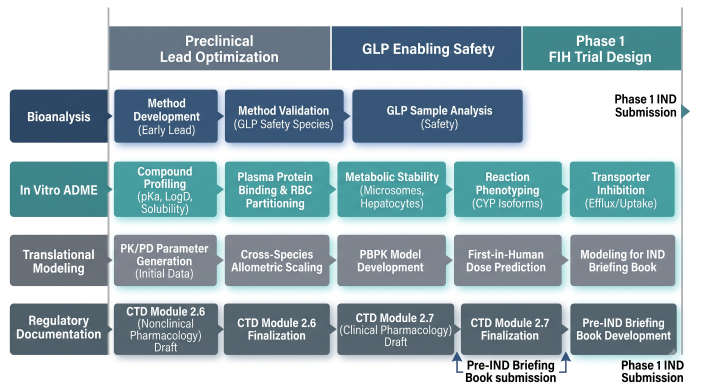
Figure 3: Integrated Clinical Pharmacology Execution Timeline: Lead Optimization to Phase 1 IND
Section 4: Operational Blueprint for Biotech IND Readiness
To assemble a compliant Clinical Pharmacology Plan for IND submission, resource-constrained biotechs should execute the following 10-point operational standard operating procedure:
- Establish Bioanalytical Validation Early: Ensure bioanalytical assays distinguish between active and inactive moieties prior to pivotal nonclinical GLP safety studies.
- Define Target-Site Exposure Targets: Quantify unbound drug concentrations at the site of action rather than relying solely on total systemic plasma levels.
- Characterize Immunogenicity Risks: Implement multi-tiered Anti-Drug Antibody (ADA) testing (screen, confirm, titrate, characterize neutralizing capability) for biologics, ADCs, oligonucleotides, and viral vectors.
- Execute Early Dose-Finding Simulations: Utilize translational PBPK or QSP modeling to project human pharmacokinetics and establish starting doses based on MABEL or NOAEL frameworks.
- Incorporate Dynamic Biomarkers: Integrate proximal pharmacodynamic markers in early Phase 1 protocols to establish exposure-response curves.
- Plan for Organ Impairment Evaluation: Build Population PK models that evaluate creatinine clearance, hepatic impairment markers, and body weight as intrinsic covariates during early patient cohorts.
- Conduct In Vitro DDI Screening: Screen early lead compounds against CYP enzymes, UGT pathways, and major efflux/uptake transporters (P-gp, BCRP, OATP1B1/1B3) to eliminate clinical hold risks.
- Formulate a Randomized Dose Optimization Plan: Design early clinical protocols with multi-arm dose comparison cohorts to satisfy FDA Project Optimus expectations prior to Phase 3 trial initiation.
- Build a Living CTD Architecture: Maintain updated summaries in CTD Module 2.6.4 (ADME) and Module 2.7.2 (Clinical Pharmacology) throughout Phase 1 and Phase 2 progression.
- Engage Regulatory Authorities Early: Utilize Pre-IND meeting requests to align on FIH starting dose rationale, modeling methodologies, and dose escalation study designs.
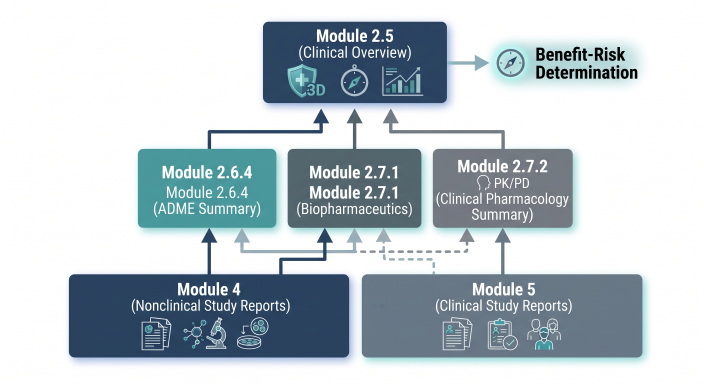
Figure 4: CTD Dossier Integration: Structuring Module 2.6.4, Module 2.7.2, and Module 2.5
Abbreviations
ADA: Anti-Drug Antibody
ADC: Antibody-Drug Conjugate
ADME: Absorption, Distribution, Metabolism, and Excretion
ASGPR: Asialoglycoprotein Receptor
ASO: Antisense Oligonucleotide
AUC: Area Under the Curve
CGT: Cell & Gene Therapy
CK: Cellular Kinetics
CPP: Clinical Pharmacology Plan
CTD: Common Technical Document
DAR: Drug-to-Antibody Ratio
DDI: Drug-Drug Interaction
DMPK: Drug Metabolism and Pharmacokinetics
FcRn: Neonatal Fc Receptor
FIH: First-In-Human
GalNAc: N-Acetylgalactosamine
IND: Investigational New Drug
MABEL: Minimum Anticipated Biological Effect Level
MIDD: Model-Informed Drug Development
MIRD: Medical Internal Radiation Dose
MTD: Maximum Tolerated Dose
NOAEL: No Observed Adverse Effect Level
OBD: Optimal Biological Dose
PBPK: Physiologically Based Pharmacokinetic
PopPK: Population Pharmacokinetics
QSP: Quantitative Systems Pharmacology
siRNA: Small Interfering RNA
TMDD: Target-Mediated Drug Disposition
TRT: Targeted Radionuclide Therapy
Technical References
- U.S. Food and Drug Administration (FDA). (2024). Optimizing the Dosage of Human Prescription Drugs and Biological Products for the Treatment of Oncologic Diseases. Final Guidance for Industry (Project Optimus).
- U.S. Food and Drug Administration (FDA). (2023). Clinical Pharmacology Considerations for the Development of Radiopharmaceuticals. Guidance for Industry / OCE.
- Shah, M., Rahman, A., Theoret, M. R., & Pazdur, R. (2022). The drug-dosing conundrum in oncology: when less is more. New England Journal of Medicine, 385(16), 1445–1447.
- Zirkelbach, J. F., et al. (2022). Improving dose-optimization processes used in oncology drug development to minimize toxicity and maximize benefit to patients. Journal of Clinical Oncology, 40(30), 3489–3493.